



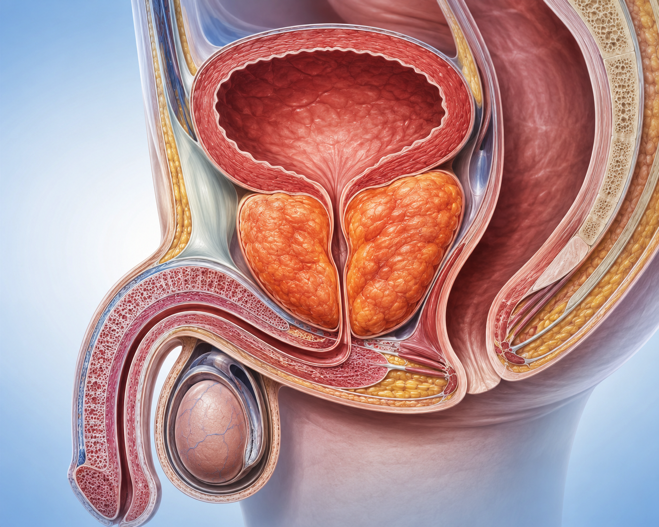
If you are a man over fifty and you have noticed changes in how you urinate — a stream that is not what it used to be, the need to go more often, waking up at night, or the frustrating feeling that you never quite empty fully — I want you to know something important: you are not alone, and this is not something you simply have to accept.
What I am describing is BPH — Benign Prostatic Hyperplasia — or what most people simply call an enlarged prostate. It is one of the most common conditions I treat, and one of the most undertreated, because so many men quietly adjust their lives around the symptoms rather than seeking help. They stop drinking water in the evening. They sit near the aisle at the cinema. They wake twice or three times a night and assume this is just getting older. It is not. And treatment can make an enormous difference.
What BPH Is — and What It Is Not
BPH is the non-cancerous enlargement of the prostate gland — a gradual process that happens naturally with age for most men. As the prostate grows, it presses on the urethra, the tube that carries urine out of the body, and this creates resistance that affects the flow of urine and the ability of the bladder to empty completely. Over time, the bladder itself adapts to working harder — and eventually can become overactive or, in some cases, struggle to empty at all.
BPH is not cancer. It does not turn into cancer. But it does share some symptoms with prostate cancer, which is one of the reasons a proper evaluation is important — to get a clear picture of what is happening and address it appropriately.
When to Come and See Me
My honest advice is: sooner than most men do. I regularly see patients who have been managing significant symptoms for three, four, five years before seeking help — by which point the bladder has often sustained some degree of damage that might have been avoided. Early assessment leads to simpler treatment and better outcomes.
Come and see me if your urine stream is consistently weak, if you are waking more than once a night to urinate, if you feel you are never fully emptying, or if urinary urgency is making you plan your day around toilet access. A consultation involves a simple questionnaire about your symptoms, a brief examination, a urine test, and a PSA blood test. From there, I can tell you clearly what is happening and what your options are.
What Treatment Looks Like
Not everyone with BPH needs surgery. Many men do very well with medications — tablets that either relax the prostate muscle to improve flow or gradually shrink the gland over months. For those who need something more, the surgical options available today are far less daunting than people imagine. Modern procedures are performed through the urethra — no cuts on the skin — and most patients go home within one to two days with a dramatically improved flow.
The goal of every treatment decision I make is to match the right solution to each individual patient. There is no standard prescription for BPH — the right answer depends on your prostate size, your symptoms, your overall health, and honestly, your own priorities and preferences. I explain all of this at your consultation, and you are always part of the decision.
About the Author
Dr. Prarthan Joshi M.S., M.Ch. (Urology)
Urologist, Kidney Transplant Surgeon & Genito-Urinary Surgeon, Zydus Hospitals, Ahmedabad.
This article is shared for general patient education and awareness. It is not a substitute for a personal consultation. If any of the symptoms or concerns here apply to you, please speak with a qualified doctor.