



Erectile dysfunction is one of those things that men rarely talk about openly — not with friends, sometimes not even with their partners, and often not with their doctor either. And because of that silence, many men simply accept it, assume nothing can truly help, or rely on tablets indefinitely without ever exploring what else might be possible. I want to talk about one option that I think deserves to be better known: PRP Therapy.
PRP stands for Platelet-Rich Plasma. I know that sounds clinical, so let me explain what it actually means in plain terms. We take a small sample of your own blood — much like a routine blood test — process it to concentrate the natural growth factors that already exist within it, and then use that concentrated plasma to stimulate healing and regeneration in the tissues of the penis. There are no synthetic chemicals, no foreign substances. Everything used in this treatment comes from your own body.
Why I Find This Approach Meaningful
What I appreciate most about PRP Therapy is what it represents: working with the body rather than around it. For many men, erectile dysfunction has a vascular cause — the small blood vessels that supply the penis are not working as well as they should, often because of diabetes, hypertension, or simply the changes that come with age. Oral medications like sildenafil improve blood flow temporarily when taken, but they do not address the underlying tissue changes. PRP takes a different approach — stimulating the body to repair and regenerate those tissues naturally, with results that develop and improve over weeks to months.
It is not a magic solution. It works best in men with vascular or tissue-related causes of erectile dysfunction — and a proper evaluation is essential before deciding whether it is right for you. But for the right patient, the results can be genuinely significant, and the fact that it carries essentially no risk of allergic reaction because it uses your own biological material is a real advantage.
The Questions I Hear Most Often
Is this painful?
The procedure is minimally invasive and well-tolerated by most men. A topical numbing agent is applied beforehand, and most patients describe the experience as much less uncomfortable than they expected. There is no anaesthesia, no hospital admission, and most men return to their normal activities the same day.
How many sessions will I need?
Most patients undergo two to three sessions spaced several weeks apart. Results typically begin to develop over four to twelve weeks as the regenerative process takes effect. I review progress with every patient at each follow-up, and the plan is always adjusted based on how you are responding.
Can I use PRP alongside my current medication?
In most cases, yes. PRP Therapy can complement oral medications or other treatments rather than replacing them — and in some men, it reduces the need for medication over time. This is something we discuss carefully at your consultation based on your full clinical picture.
A Word About Seeking Help
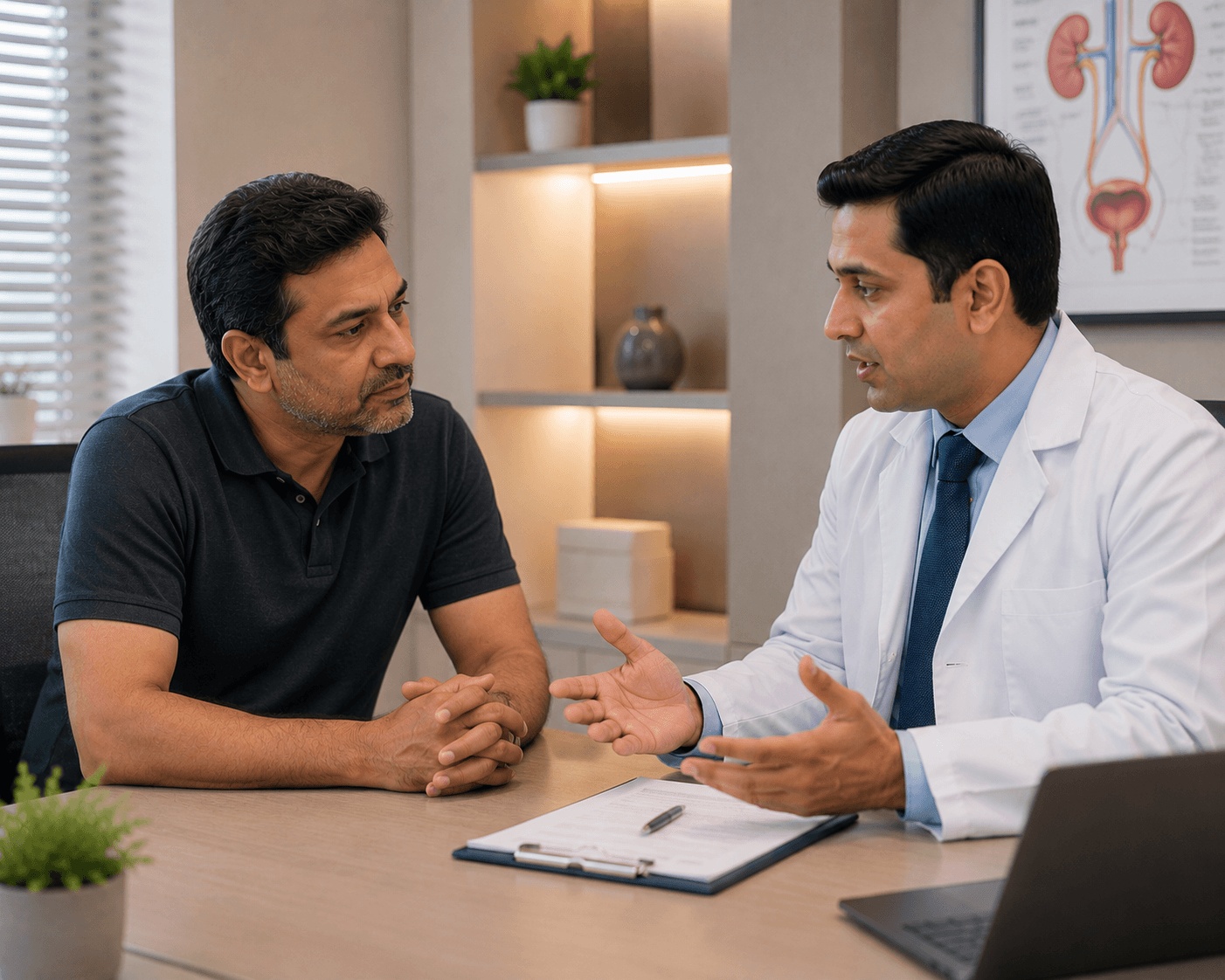
If erectile dysfunction has been affecting your confidence, your relationship, or your sense of self — please know that this is a medical condition, not a personal failing. It has causes that can be evaluated, and it has treatments that can genuinely help. Coming to speak with me is not an admission of weakness. It is one of the most straightforward things you can do for your own health and well-being.
The consultation is completely confidential, the conversation is private, and whatever you share stays between you and me. That is a promise I make to every patient who walks through my door.
About the Author
Dr. Prarthan Joshi M.S., M.Ch. (Urology)
Urologist, Kidney Transplant Surgeon & Genito-Urinary Surgeon, Zydus Hospitals, Ahmedabad.
This article is shared for general patient education and awareness. It is not a substitute for a personal consultation. If any of the symptoms or concerns here apply to you, please speak with a qualified doctor.