



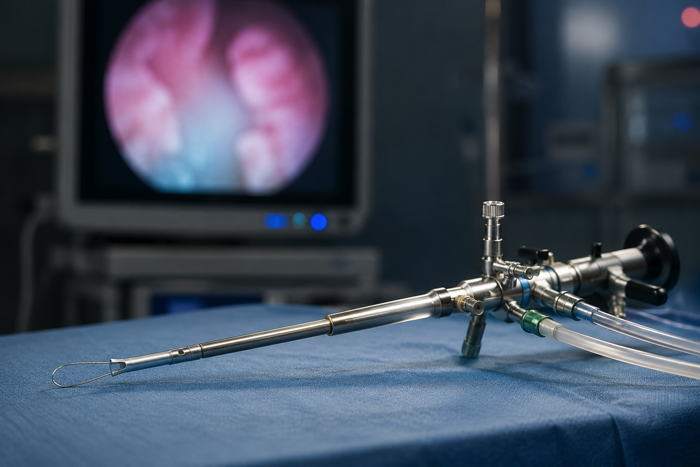
When I tell a patient that he needs surgery for his enlarged prostate, the reaction is often a mix of concern and resignation. He imagines something significant — a long operation, a difficult recovery, weeks out of action. And when I then explain that the procedure involves no cuts on his skin, that he will likely go home within one to two days, and that dramatic improvement in his urine flow is expected within a few weeks, the look of surprise on his face is something I have come to find genuinely gratifying.
Bipolar TURP — Transurethral Resection of the Prostate using bipolar energy — is the gold standard surgical treatment for an enlarged prostate. It has been refined over decades, and the modern bipolar version of this procedure is one of the safest, most effective, and most durable treatments available for BPH. Let me explain what it actually involves.
What Happens During the Procedure
The entire operation is performed through the urethra — the natural channel through which urine exits the body. No incisions are made on the skin at any point. A thin telescope with a surgical instrument is passed through the urethra, and the obstructing prostate tissue is systematically removed using a precisely controlled electrical loop. The result is a clear, wide urethral channel that allows urine to flow freely.
What makes bipolar technology specifically important is the use of normal saline as the irrigating fluid during surgery. Older techniques required a different solution that, in large quantities, could cause a dangerous electrolyte disturbance known as TURP Syndrome. Bipolar energy eliminated that risk — because the electrical circuit is completed within the instrument itself rather than passing through the patient’s body. This made the procedure significantly safer, particularly for older men and those with heart conditions.
What Recovery Looks Like
After surgery, a urinary catheter is placed for bladder irrigation and is typically removed within one to two days once everything has settled. Most patients go home shortly after. There will be some blood in the urine and temporary urgency or burning for two to four weeks as healing progresses — this is completely normal and resolves on its own. Most men can return to desk work within one to two weeks. Heavy lifting and strenuous exercise should be avoided for four to six weeks.
The improvement in urine flow is typically noticeable very quickly once the catheter is removed — often described by patients as the strongest flow they have had in years.
A Few Things Worth Knowing in Advance
Retrograde ejaculation — where semen travels into the bladder during orgasm rather than exiting externally — is a common and expected consequence of TURP, occurring in the majority of men. I say “consequence” rather than “side effect” because it is a predictable outcome of how the procedure works. It does not affect sexual pleasure or the ability to have an erection, but it does affect fertility. If fathering children is something you are still considering, this is an important conversation to have with me before proceeding. The results of Bipolar TURP last ten to fifteen years for most patients — and that long-term durability is one of the reasons it remains the treatment I recommend most often for moderate to severe BPH.
About the Author
Dr. Prarthan Joshi M.S., M.Ch. (Urology)
Urologist, Kidney Transplant Surgeon & Genito-Urinary Surgeon, Zydus Hospitals, Ahmedabad.
This article is shared for general patient education and awareness. It is not a substitute for a personal consultation. If any of the symptoms or concerns here apply to you, please speak with a qualified doctor.