


Frequent Urination Treatment in Ahmedabad — Expert OAB & Bladder Care by Dr. Prarthan Joshi
Going to the bathroom more than 8 times in 24 hours — or planning every journey, meeting, and outing around the location of the nearest toilet — is not a personality trait. It is a medical symptom with identifiable causes and highly effective treatments. Frequent urination treatment in Ahmedabad at Zydus Hospitals under Dr. Prarthan Joshi — M.S., M.Ch. (Urology) — begins with identifying exactly why the bladder is demanding such frequent attention.
What is Normal Urinary Frequency?
Urinating 6 to 8 times in 24 hours is considered normal for an adult with average fluid intake. Frequency above 8 voids per day — particularly when associated with urgency, small voided volumes, or nocturia — is clinically significant and warrants evaluation.
Common Causes of Frequent Urination
- Overactive Bladder (OAB) — the most common cause. Uninhibited bladder muscle contractions create sudden urgency and frequent voiding with or without leakage.
- BPH (Enlarged Prostate) — the chronically full bladder from incomplete emptying triggers increased voiding frequency. See BPH treatment in Ahmedabad.
- Urinary Tract Infection — acute cystitis causes intense frequency and urgency, usually with burning. See UTI treatment in Ahmedabad.
- Diabetes mellitus — elevated blood glucose drives osmotic diuresis and markedly increased urine output.
- Interstitial cystitis — chronic bladder wall inflammation causing persistent frequency, urgency, and pelvic pain without infection.
- Bladder stones or tumours — local irritation of the bladder wall increases voiding frequency.
- Excessive fluid intake — particularly caffeine, alcohol, and carbonated drinks which have additional diuretic and irritant effects.
Diagnostic Evaluation
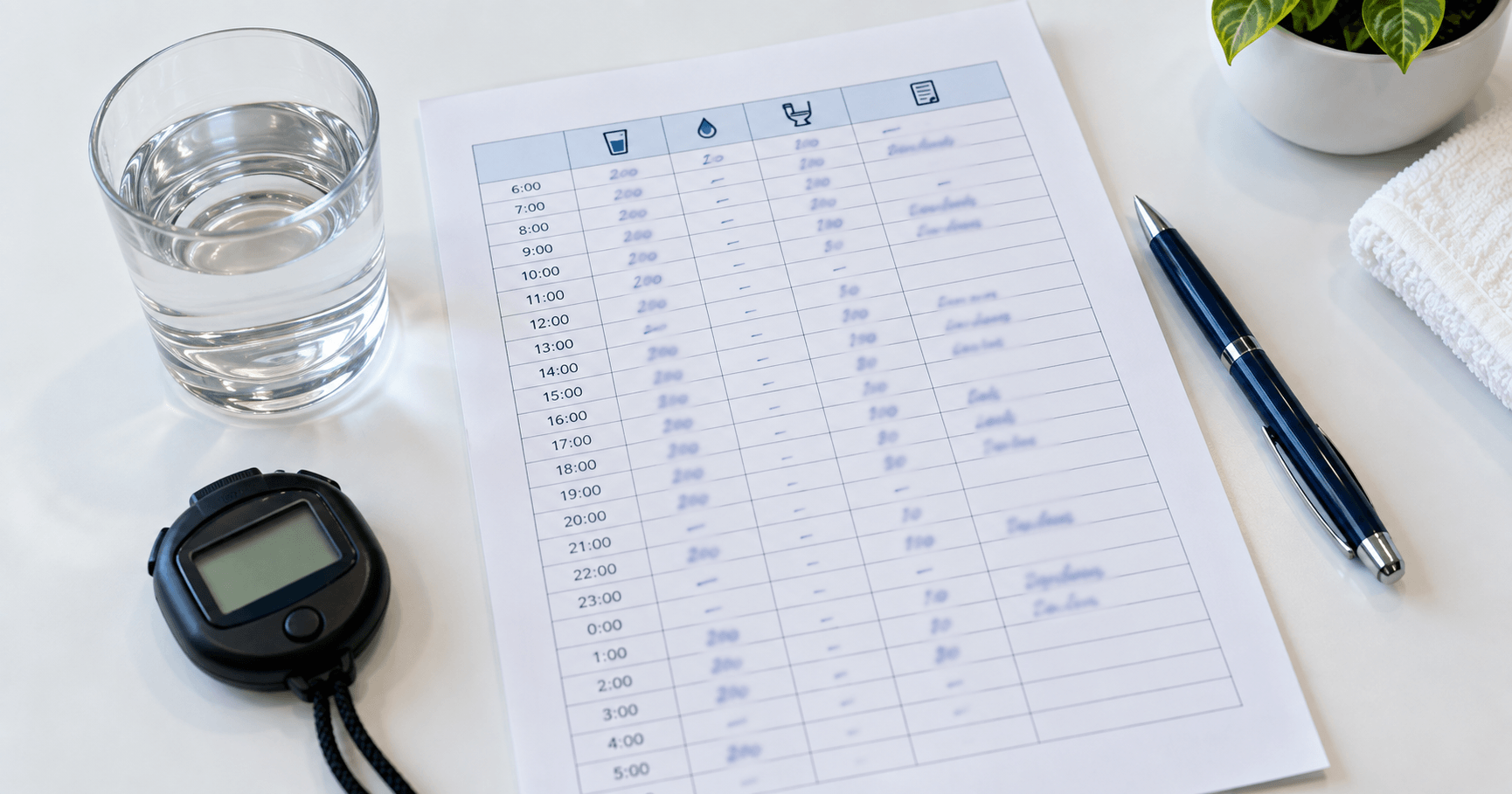
- 3-day bladder diary — the most informative first investigation. Records voiding times, volumes, fluid intake, urgency episodes, and leakage across three representative days.
- Urine culture — excludes active infection driving frequency.
- Uroflowmetry and post-void residual — assess flow rate and bladder emptying efficiency.
- Bladder ultrasound — detects stones, thickened bladder wall, or residual urine.
- Urodynamic studies — where OAB diagnosis is uncertain or before surgical intervention.
Treatment Options
- Bladder training — structured programme to gradually extend voiding intervals and reduce urgency episodes.
- Fluid and dietary management — reducing caffeine, alcohol, and evening fluids significantly reduces frequency in many patients.
- Anticholinergic medications — oxybutynin, solifenacin — relax the overactive bladder muscle.
- Beta-3 agonist therapy — mirabegron — an alternative with fewer dry-mouth side effects.
- Botox bladder injection — for OAB not responding to oral medication. Reduces frequency and urgency for 6 to 12 months per treatment session. See overactive bladder treatment in Ahmedabad.
Related Conditions
Frequent urination often coexists with nocturia, weak stream, and incomplete emptying — all of which are evaluated together at Zydus Hospitals for the most complete and effective treatment outcome.
Book Your Consultation
📞 +91 78743 35577 | 🌐 prarthan.com